
Understanding Humanism
Non-religious childhoods
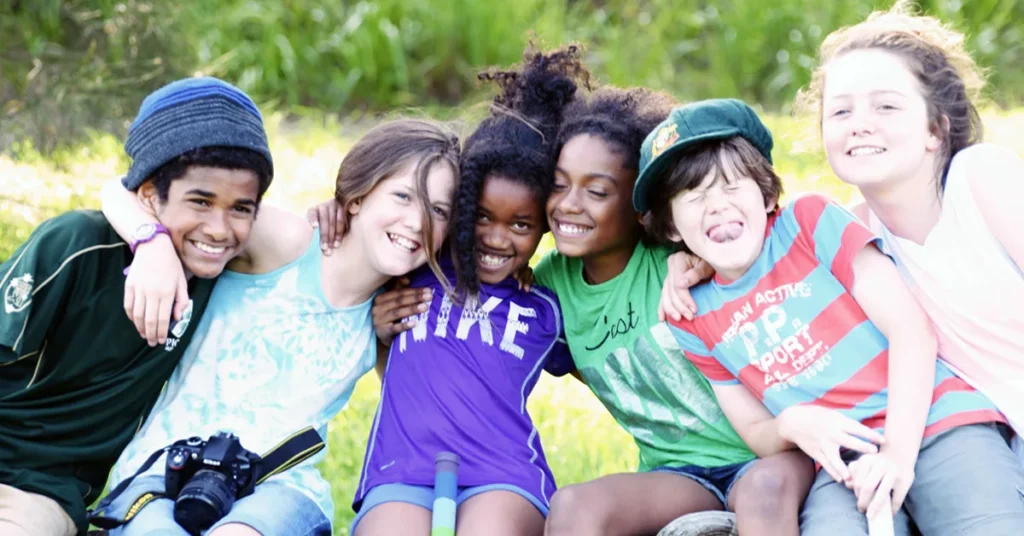
At Understanding Humanism we’ve always believed that being non-religious is no obstacle to living a good, happy, and meaningful life. It is, however, always nice to see empirical research that backs that up. The recent work of Anna Strhan (University of York) and Rachael Shillitoe (University of Birmingham) described in Growing Up Godless: Non-religious Childhoods in Contemporary England provides evidence that this claim also holds true for some of the youngest members of society.
Part of the Explaining Atheism programme, Strhan and Shillitoe’s research was conducted via interviews with 8–11-year-olds, their parents, and their teachers. Designed to uncover the wider beliefs and values of those children who did not believe in a god, they also explored where these attitudes and dispositions came from. In doing so the authors demonstrate a clear desire to move beyond the language of religious decline in society and instead emphasise a more positive articulation of what it means to be non-religious. Their conclusion was to describe what they discovered as a ‘pervasive humanism’.
‘This humanism centres the agency, significance, and achievements of humans, rational thought and the scientific method, and moral principles of equality and respect.
For many children, their lack of belief in a god or gods stemmed from what they saw as the absence of any empirical evidence for religious claims. Some questioned the compatibility of a benevolent god with the existence of suffering in the world. Many displayed a profound pro-science stance and, for them, holding an evidence-based understanding of the world necessitated a rejection of religion (although this did not always preclude beliefs in Santa, unicorns, and ghosts). They were, however, comfortable with the contestability of their beliefs and with others being able to disagree, demonstrating respect for diversity and freedom of belief.
While acknowledging their parents’ role in deciding on their religious or non-religious identity, the children emphasised their own autonomy in matters of belief.
‘My beliefs are important to me because they are my opinion. I don’t really want to copy anybody… I actually want to speak true of what I think.’
Hailey, St Peter’s CofE Academy
Although unfamiliar with the term ‘humanist’, many readily embraced it when it was presented to them as a way of describing their beliefs and values.
‘When I became the age of seven, we were all talking about God and I didn’t believe there was a God, I just thought it was made up like a myth. I didn’t believe it and then I said to my mum, ‘Is there a religion that I can have, because I don’t want to be nothing? That felt to me like I’m not special. . .. My mum said there’s a humanist, so I became a humanist when I was eight or nine.’
Callie, Sunnybank Community Primary School
The research highlights that these children did not perceive their non-religious worldview as lacking. They found enchantment in science and discovery, and awe and wonder in the natural world. Friendship and connection were key sources of meaning and happiness. They considered their lives to be full. The study also strongly refutes stereotypes of the non-religious as morally adrift, demonstrating the children’s commitment to humanist values such as respect, equality, and care for others and the wider animal world. In the case of these young people, self-determination did not mean selfishness.
‘I feel like the world should be a better place, if we’re like a family we can all work together… and we can all work out our problems… we can stop pollution and stuff like that.’
Gracie, St Peter’s CofE Academy
So where does this humanism come from? The authors point out ‘push factors’ such as a lack of religious socialisation, with religion rarely discussed at home. This factor has already been cited in many other studies as the key driver of the trend away from religion. However, the authors also highlight ‘pull factors’ such as the appeal of non-religious values. Parents, both religious and non-religious, championed their children’s freedom and personal autonomy to make their own decisions about what they believed.
One of the most compelling insights of Growing Up Godless lies in its analysis of the role of schools in fostering a humanist outlook. Rather than being a product of any explicit promotion of humanism due to the direct influence of humanist organisations, the authors described the culture of schools and educational frameworks — emphasising rights, freedoms, rationality, equality, authenticity, and choice — as one which creates fertile ground for humanist attitudes to flourish. School assemblies and displays promote these values, and celebrate human achievements. In those schools where Christianity was privileged, such as through prayer and collective worship, it sat in tension with humanist values, and sometimes helped to crystallise children’s non-religious identity and beliefs.
Furthermore, the study suggests that Religious Education (RE) lessons, by introducing many children to religion for the first time, made them aware of their own lack of religious beliefs and prompted many to critically evaluate or consciously reject belief in gods. While teachers advocated for the compatibility of science and religion, comparisons sometimes fostered the perception of a conflict. The authors noted that non-religious worldviews were rarely explored in depth in the classroom (sometimes to the disappointment of the children) and that this both marginalised and privileged them. Often unexamined, a humanist worldview may therefore be being treated as self-evident.
‘This [humanist] worldview is not, as we have noted, being expressed in terms of discrete creeds, texts, rituals or practices in the way in which children are being taught about religion. Rather it is seen in how the teachers, parents, and children express an epistemology that valorizes rationality and science as ways of knowing the world, and principles of reflexive autonomy, individual rights and freedoms.’
Questions, of course, remain on what will happen to these children’s beliefs and worldviews as they move into adolescence and then adulthood. However, other research into how worldviews stick and shift across lifetimes indicates the unlikelihood of many of them transitioning towards religion.
The authors state that they did not expect at the beginning of their research to end up writing about humanism. However, by the end they saw humanism as the label that most closely resonated with what mattered to the children they interviewed. For them, this was not a story of loss, but one of becoming… ‘becoming humanist’. They clearly saw this as no bad thing. The absence of religious belief in no way hindered these children’s moral development or their ability to lead rewarding, meaningful lives.
‘While [the children] don’t believe in God- because the absence of evidence is at odds with their empiricist sensibilities, and theism jars with their sense of their own agency – they locate their beliefs in the this-worldly realm of science, and relationships with friends and family. They also express the importance of joy and happiness, as well as their valuing of authenticity… This humanism encompasses… faith in a vision of humans’ relatedness and connectedness as motivating people to work together to make the world a better place, including addressing environmental crises. While this is an individualistic ethos in many ways, it is also directed towards a wider collective, planetary good.’
Click here for more of our articles!