
Understanding Humanism
Humanism: a global history
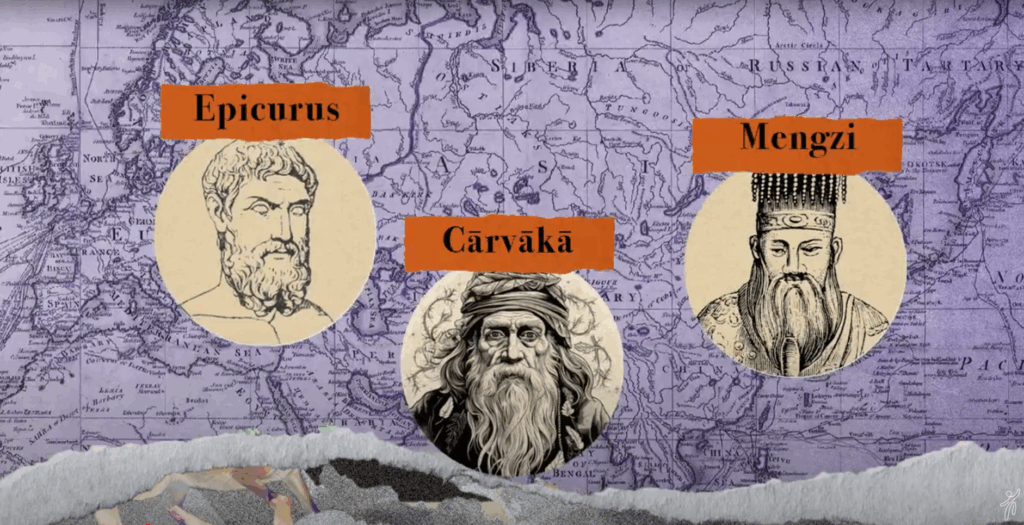
When we use the word ‘humanism’ in English today, we’re usually talking about a way of living that centres reason, empathy, and human welfare, without belief in gods or the supernatural. This use of the word has a long history in Europe, but the ideas behind it aren’t uniquely Western.
In fact, there have always been people across the world who have lived without the need for religion to guide their actions and who believed we should make decisions based on human needs in the here and now, and a consideration of the consequences of our actions. Good teaching about humanism should recognise this wider story.
A global movement
Today, humanism exists as a diverse global movement, with humanist organisations active in over 80 countries across Europe, Africa, Asia, Oceania, and the Americas. These groups often draw on different philosophical or cultural roots for their understanding of humanism, shaped by the histories and outlooks of their own societies.
The country with the most self-identified humanists, the largest number of humanist organisations, and the most people who are paying members of humanist associations is India. There, modern humanist and rationalist organisations sometimes see themselves as continuing the legacy of the naturalistic Charvaka school of thought. Meanwhile in parts of Africa, humanist associations often identify strongly with the ethical values expressed in the ubuntu philosophy, which emphasises shared humanity and communal care.
This rich variety of philosophical inheritances leads to differences in how non-religious people in those countries articulate their perspectives. It also results in different ways that humanist associations explain what humanism means, sometimes using story, metaphor, or symbolism drawn from their own cultures. Yet under the surface all of these diverse groups share the same core philosophical outlook, including the humanist commitment to reason, empathy, human dignity, and the conviction that we can all live good lives without reliance on religious or supernatural beliefs.
India: Charvaka and Lokayata
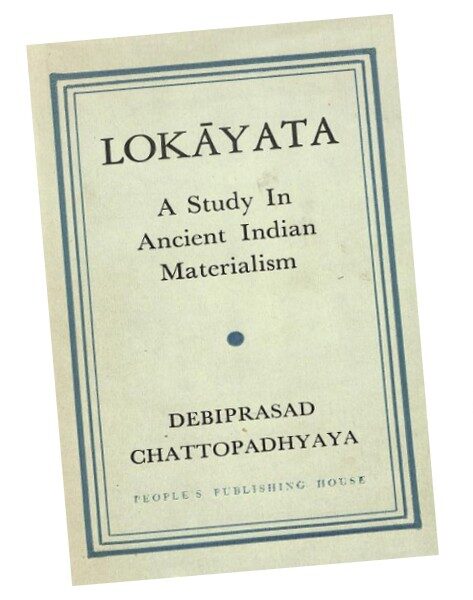 In India, as early as the 6th century BCE, the Charvaka or Lokayata (‘Worldly’) school of philosophy openly rejected belief in gods, karma, or an afterlife. They centred themselves in the natural world, valuing direct experience, critical thinking, and pleasure in this life.
Much of what we know about them comes from religious critics who disagreed with their views. For example, we can find reference to the Charvaka’s naturalistic understanding of human beings and the world in the Sarva-darsana-sangraha (the collection of all philosophies), written in the Fourteenth Century, but which references earlier writings.
‘Higher than this world is none. There is no heaven and no hell.’
‘The atman (or self) is the body itself… It is nothing else which is distinct from that body.’
‘Who colours wonderfully the peacocks or who makes the cuckoos coo so well? There is in respect of these things no cause other than nature.’
Their existence shows that non-religious philosophies in other parts of the world are often not new or imported ideas. They have always been part of the human story. This ancient South Asian tradition has inspired more recent humanist thinkers such as the Indian revolutionary and philosopher M. N. Roy:
‘Morality is natural, it is a social convention and convenience, not a divine command… The purpose of life is to live; and the only wisdom is happiness.’
M. N. Roy (1887-1954)
China: Confucianism
Confucianism is a tradition that has shaped Chinese society for over 2,000 years. It focuses on ethical living, family, and education rather than religious faith. It encourages people to act with compassion (‘ren’, literally ‘humaneness’ or ‘love for others’) and recognise the human responsibility to create harmony in their communities, advocating the Golden Rule: ‘Do not do to others what you would not like yourself’.
A loyal and influential follower of Confucius was Mencius (371-289 BCE). His ethics resonates well with modern humanists in that he recognised our natural instincts for empathy and compassion, while also understanding that it was the responsibility of human beings to cultivate these virtues in order for them to flourish.
‘All humans have a mind which cannot bear to see the sufferings of others… When someone sees a child about to fall into a well, they will all experience a feeling of alarm and distress… to be without this compassion is not human… Since we all have [this principle and others] in ourselves, let us know to give them all their development and completion, and the issue will be like that of a fire which has begun to burn, or of a spring which has begun to find vent. Let them have their full development, and they will suffice to love and protect all within the four seas.’
Mencius (372-289 BCE)
While not all versions of Confucianism are strictly non-religious, it offers an example of an ethical system centred on human life and relationships rather than divine command.
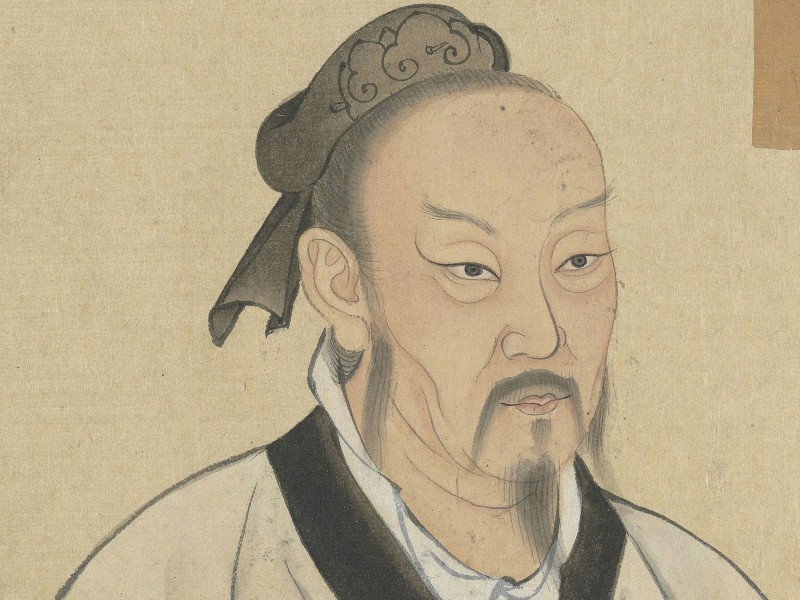
Mencius
Africa: Ubuntu and Akan humanism
‘[The] African traditional worldview is centred more on the human than on Gods’.
Lola Tinubu, a founder of the Association of Black Humanists
In southern Africa, the concept of ubuntu — ‘I am because we are’ — is a powerful expression of shared humanity, dignity, and community. Although ubuntu is often spoken of in both religious and secular terms, it is understood by many people as a humanist approach to life and is seen as a source of inspiration for many non-religious people in Africa today. It centres human relationships, mutual care, and social responsibility.
‘We can only be fully human when we acknowledge, accept, appreciate and nurture other people’s humanity. In practice, Ubuntu fosters group solidarity, compassion and respect for others and encourages and enables individuals to continually expand their circle of humanity to embrace and celebrate diversity… Ubuntu is about the common good of society.’
Ethel Maqeda, Zimbabwean British writer
In West Africa, particularly among the Akan peoples, there is a long-standing tradition (dating at least as far back as the 13th Century) of ethics rooted in human wellbeing, social balance, and personal responsibility. What is good is determined by its consequences for human beings and human society rather than its compliance with divine commands. While religious beliefs have often been layered onto these ideas, the core focus of Akan humanism is believing in people, not gods.
Europe: from ancient Greece to Skandanavia
In Europe, the rich history of humanist ideas stretches back thousands of years before the word ‘humanism’ was first used in English. (For more on the origins of the word ‘humanism’ see our article ’Humanism: a history of the word’.)
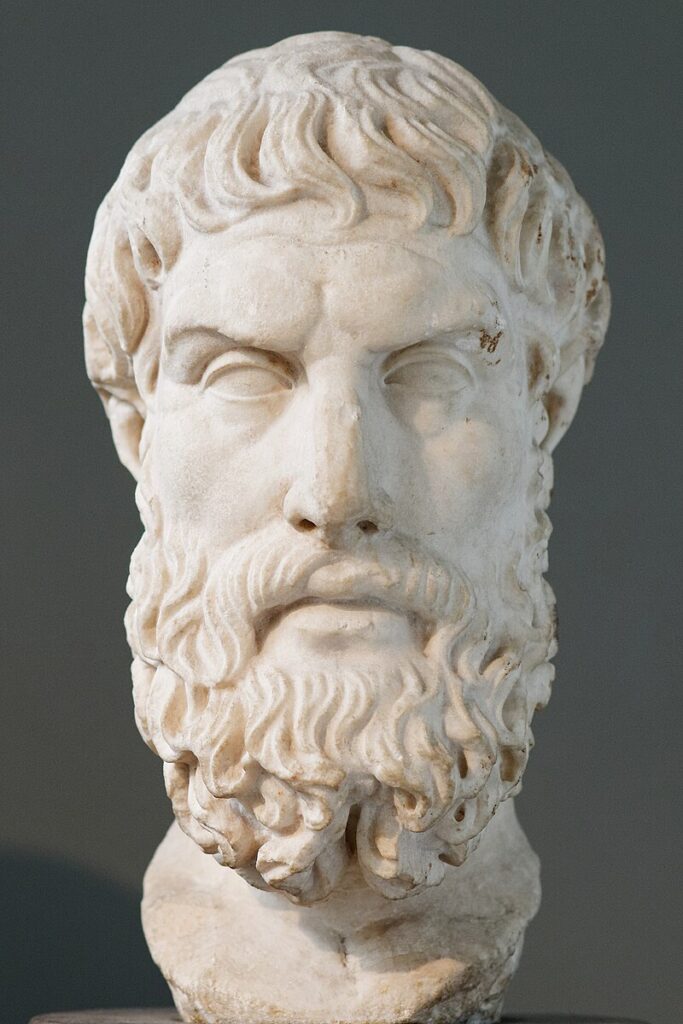
Epicurus
In Ancient Greece, philosophers such as Democritus and Epicurus promoted naturalistic and human-centred ways of thinking. Democritus is remembered for his early atomic theory and his belief that knowledge should be grounded in observation of the natural world. Epicurus argued that the purpose of life was to seek happiness in this life through rational reflection, companionship, and modest pleasures, and denied that gods intervened in human affairs. Both encouraged moral thinking based on human needs and the pursuit of a good life, rather than divine instruction.
‘Men ask for health in their prayers to the gods: they do not realise that the power to achieve it lies in themselves.’
Democritus (c. 460-370 BCE)
‘Of all the means which wisdom acquires to ensure happiness throughout the whole of life, by far the most important is friendship.’
Epicurus (341-270 BCE)
We also have to be careful within Europe not to imagine that humanist ideas ‘began’ in the Mediterranean and moved outwards. A good example of this is the goðlauss in Scandinavian and Icelandic literature: ‘godless’ people who concluded they did not believe in either the local pagan religions or the spreading monotheistic beliefs. Christian writers who translated the Icelandic sagas described them as ‘men who, turning away in doubt from the heathen faith, placed their reliance on their own strength and virtue… in themselves they trusted.’ They weren’t philosophers but everyday people whose presence in the sagas suggests that humanist approaches were widely visible and recognised in northern Europe before the arrival of Christianity.
Although few of the individual figures referenced above would have shared all their beliefs with humanists today, it is clear that a great many contemporary humanist beliefs and values can be found in the ideas of thinkers from the past and across the globe. There is no single origin of humanist thought. It is a product of shared human instincts across diverse cultures.
Why this matters in the classroom
When we teach about humanism, it is important to show that it is not just a recent or Western invention, or influenced solely by Western philosophies. People around the world have always found meaning and happiness in life without appealing to gods. They have acted ethically, helped others, and worked for justice based on human values.
While it’s common to acknowledge that different kinds of thinking can influence each other over time, including religious and humanist thinking, it’s an error to extrapolate from our familiarity with European humanism and European Christianity and overstate their degree of influence on each other. Humanist ideas have also flourished in pre-Christian societies and in other parts of the world where people have instead drawn inspiration from regional myths and stories, national traditions and rites of passage, and local moral philosophers.
The presence of historic humanist thinking can also often be hidden by the dominant religious culture of the time, be that Christianity in Europe or Hinduism in India. This continues even into modern times where there are many cases of people’s humanist beliefs being downplayed. For example, in the UK, the fact that NHS creator Nye Bevan, the suffragette Sylvia Pankhurst, and the code-breaker Alan Turing were all humanists is rarely mentioned in stories or films about their lives.
Teaching about non-Western forms of humanism also emphasises to learners that humanist values and humanist thinking don’t spring from humanist organisations, but rather, are things that many people throughout history have concluded for themselves without any outside help. By showing students that humanist ideas appear in many cultures, we give a fuller and fairer picture of how people around the world have made meaning, decided right from wrong, or thought about life’s big questions. It showcases how empathy, compassion, and reason are shared human values, and not the property of any one tradition.
Resources
You can find resources for the classroom in the Global humanism and History and influence areas on Understanding Humanism: for example, see Humanisms of the world.
Information and further helpful links can be found in the Humanist Heritage article Humanism: a global heritage.
Click here for more of our articles!